Beginner’s Guide to AI Tools
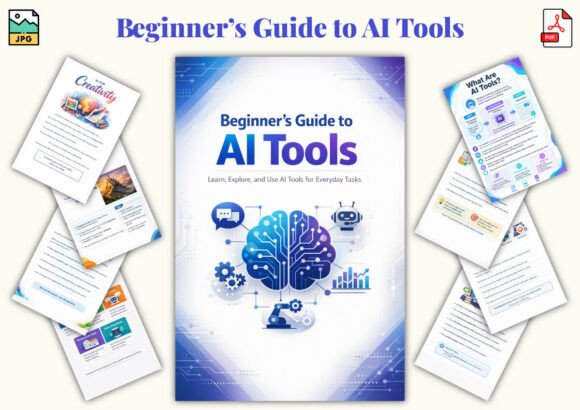
Are you ready to dive into the world of Artificial Intelligence without feeling overwhelmed? The Beginner’s Guide to AI Tools is your go-to resource for understanding and using AI tools with confidence. Designed for anyone from complete novices to curious learners, this guide breaks down complex concepts into simple, easy-to-follow steps. Whether you're a student, content creator, freelancer, or small business owner, this guide offers practical insights that can be applied in real-life situations.
This digital resource features 25 professionally designed pages, making it perfect for reading on any device. With a clean 6×9 inch layout, it's ideal for use on platforms like Kindle Direct Publishing (KDP). Inside, you'll find beginner-friendly explanations, infographic-style visuals, worksheets, and practice activities that help reinforce what you learn. Real-life examples and use cases are included to show how AI tools can be used across different industries and purposes.
What You’ll Learn
The Beginner’s Guide to AI Tools covers everything you need to know about AI tools, starting with the basics. Here's what you can expect to learn:
- What AI tools are and how they work: Understand the fundamentals of AI and how these tools operate behind the scenes.
- Different types of AI tools: Explore various categories such as writing, image generation, chatbots, and productivity tools.
- How to choose the right AI tools: Discover strategies for selecting the best tools based on your needs and goals.
- Step-by-step guide to getting started: Get hands-on instructions for setting up and using AI tools effectively.
- Tips for using AI effectively: Learn best practices to maximize the benefits of AI in your daily tasks.
- Common mistakes to avoid: Identify pitfalls that new users often encounter and how to steer clear of them.
- How to write better AI prompts: Improve your results by learning how to craft effective prompts for AI models.
- Using AI for writing, images, learning, and business: Find out how AI can support your creative projects, educational pursuits, and professional endeavors.
- Safe and responsible use of AI: Stay informed about ethical considerations and privacy concerns when using AI tools.
Who Is This Guide For?
The Beginner’s Guide to AI Tools is tailored for a wide range of audiences. Let's look at some of the key groups who can benefit from this guide:
Beginners with No Technical Background
If you've never worked with AI before, this guide is an excellent starting point. It avoids jargon and technical complexity, focusing instead on practical applications that are easy to grasp. You'll learn how to navigate AI tools without needing a background in computer science or programming.
Students and Learners
Students can use this guide to enhance their research, writing, and project management skills. AI tools can assist with generating ideas, organizing information, and even creating visual content for presentations. Whether you're studying for exams or working on a thesis, AI can be a powerful ally.
Content Creators and Designers
For those in the creative field, AI tools offer exciting possibilities. From generating text for blog posts and social media updates to creating stunning images and videos, AI can streamline your workflow and spark new ideas. The guide includes specific examples of how creators can leverage AI to boost their productivity and creativity.
Freelancers and Small Business Owners
Freelancers and small business owners can benefit from AI tools that help automate repetitive tasks, improve customer service through chatbots, and generate marketing content. By integrating AI into their workflow, they can save time, reduce costs, and focus more on growing their business.
Real-World Applications
The usefulness of the Beginner’s Guide to AI Tools extends beyond theory. Let's explore some real-world scenarios where this guide can make a difference:
Writing and Content Creation
Whether you're drafting emails, writing articles, or creating social media content, AI tools can help you generate high-quality text quickly. For example, a writer might use an AI-powered tool to come up with article ideas, refine their prose, or even translate content into multiple languages.
Design and Visual Content
AI image generators can be incredibly useful for designers looking to create visuals for websites, advertisements, or marketing materials. These tools can generate logos, illustrations, and even realistic photos based on simple text prompts. This makes it easier than ever to produce visually appealing content without advanced design skills.
Education and Learning
Students and educators can use AI tools to personalize learning experiences. AI-powered tutoring systems can adapt to individual learning styles, while language learning apps can provide instant feedback on pronunciation and grammar. Additionally, AI can help organize study materials and create interactive quizzes for better retention.
Business Operations
Small businesses can use AI tools to improve customer engagement, manage inventory, and analyze market trends. Chatbots can handle customer inquiries around the clock, while AI-driven analytics can provide insights into consumer behavior and sales performance. This helps businesses make data-driven decisions and stay competitive in today's fast-paced environment.
Considerations Before Getting Started
While AI tools offer many benefits, there are also important factors to consider before using them. One of the most critical aspects is understanding the limitations of AI. While these tools can generate impressive results, they are not infallible. They may sometimes produce inaccurate or biased outputs, especially if trained on incomplete or flawed data.
Another consideration is privacy and security. When using AI tools, it's essential to ensure that your personal data is protected. Always read the terms of service and privacy policies of the tools you use to understand how your information will be handled.
Lastly, it's important to approach AI with a mindset of continuous learning. As technology evolves, so do AI tools. Staying updated with the latest developments and best practices will help you get the most out of these tools over time.