2026–2027 Travel Journal
Designing for travel experiences requires a blend of functionality, visual appeal, and practicality—qualities that the 2026–2027 Travel Journal exemplifies with its elegant layout and comprehensive features. As a graphic designer or creative professional, you understand the importance of visual communication in engaging users and delivering a seamless experience. This journal is not just a tool for travelers but a powerful asset that can inspire design thinking, offering insights into how structured layouts, typography, and color schemes contribute to usability and aesthetics.
Visual Design Meets Practical Functionality
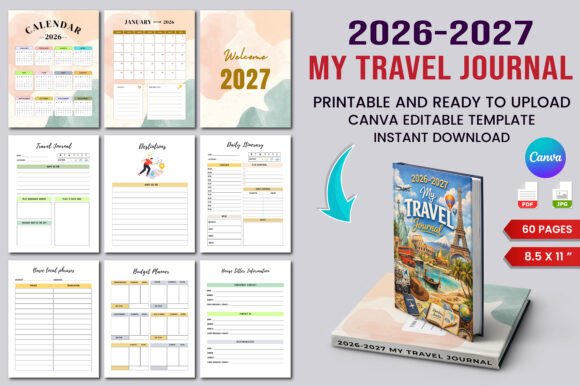
The 2026–2027 Travel Journal showcases a well-thought-out visual hierarchy, ensuring that information is easy to navigate and visually appealing. From full-year calendars to detailed itineraries, each section is designed with a clear purpose and intuitive flow. The use of consistent typography and a balanced color palette reinforces brand identity, making it an excellent reference for designers working on editorial layouts, marketing materials, or digital products.
For professionals in branding and logo design, this journal serves as a case study in how clean, modern aesthetics can enhance user engagement. Its layout emphasizes readability, which is crucial for both print and digital formats. Whether designing a website, social media content, or packaging, understanding how to balance form and function is key to creating a polished result.
Typography and Layout Inspiration
The 2026–2027 Travel Journal employs a variety of typographic styles—from headings to body text—demonstrating how different fonts can be used to guide the reader's eye and emphasize important details. This approach aligns with current design trends that prioritize legibility and visual interest without overwhelming the viewer.
As a designer, considering the right typeface for your project is essential. A clean sans-serif font might be ideal for digital interfaces, while a serif font could add elegance to printed materials. The journal’s design offers practical examples of how these choices impact the overall look and feel of a product.
Enhancing User Experience Through Design
In UX and UI design, the goal is to create interfaces that are both beautiful and functional. The 2026–2027 Travel Journal achieves this by organizing information in a way that reduces cognitive load and makes planning more enjoyable. This concept translates directly to web design, where thoughtful layout and navigation can significantly improve user satisfaction.
For those involved in digital marketing or social media graphics, the journal’s structure provides inspiration for creating engaging content. Its weekly itinerary and activity booking sections, for example, demonstrate how interactive elements can be integrated into design workflows to increase user participation and retention.
- Branding: Use consistent color schemes and typography to reinforce brand identity across all platforms.
- User Engagement: Prioritize clarity and ease of use in every design element, from buttons to headers.
- Creative Projects: Leverage the journal’s layout for inspiration in developing new editorial or packaging designs.
The 2026–2027 Travel Journal is more than just a planner—it's a testament to how thoughtful design can elevate any creative endeavor. By incorporating its principles into your workflow, you can ensure that your projects not only look great but also deliver exceptional value to users.